
Common Red Dog Terms Clarified

Walking into a Red Dog game for the first time can be like learning a foreign language. Even if you have experienced a few hands of poker in your career, the particular lingo that comes with this fast, three-card banking game is something else. We have observed plenty of players start with a confident nod, only to hesitate when the dealer requests if they want to “ride the rag.” This guide decodes that slang, clarifies the math, and offers you the terms you need to follow the action without delay. By the time you are done reading, words like “spread limit” and “action button” should feel as recognizable as the chips in your pile of chips.
Dealer Terminology and Table Phrases
“Riding the Rag” and Spread Declarations
In a live dealer context or in a animated social feature of a virtual game, you could hear the term “rag” used frequently. A “rag” signifies a low-value card that does not seem to aid the player, usually a small spread. When a dealer sets up a 3 and a 5, leaving just the 4 as the winner, they could slide the cards and informally refer to “riding the rag,” meaning we are wagering on a narrow and risky window. Dealers are trained to announce the spread clearly, frequently tapping the felt to count out the count of winning cards. “Seven cards to win” indicates a good spread where a wide range of ranks will ensure an even-money return, driving the majority of strategists to double right away.
Getting Acquainted with the “Action Button”
In the digital environment, the chaotic energy of a crowded pit is substituted by a clean interface, but the jargon continues on the screen. The “Action Button” is the interactive element that activates the next step. After the ante is placed and the cards turn over, the interface fades until we click a clearly marked button to optionally “Raise” or “Stand.” On various platforms, such as the refined digital lobby at Duel Casino, the button glows softly to direct the flow without hurrying us. The term “Repeat Bet” is also prevalent, permitting us to quickly repeat the prior round’s ante size, which creates a seamless, fast-paced rhythm once we are comfortable with the game’s volatility and rhythm indicators.
The Basis of the Game
The Primary Aim and Standard Procedure
At its heart, Red Dog is a side wager on the spread between two cards. The dealer sets two cards face up on the felt, and our task is to determine whether a third card, drawn from the same deck, will rank in value between those first two values. If the initial two cards are consecutive, such as a five and a six, no spread applies; this results in a push, where our original wager stays unchanged and simply remains on the table for the next round. Comprehending this core mechanic immediately demystifies the game’s pace, which runs considerably quicker than blackjack because we are not making numerous hitting or standing decisions against the dealer’s hand. The round finishes immediately based on that single third draw.
The 1-to-11 Spread Range
The entire game revolves around a spread of 1 to 11 cards. A spread of one means the two cards are two ranks apart; for instance, a 3 and a 5 have a single card (a 4) between them, producing a narrow one-card spread. A maximum spread of 11 occurs when an Ace and a King sit on the table, conceptually leaving 11 ranks in the middle if we ignore the fact that they are consecutive in a circular sense; however, in standard Red Dog rules, Ace-King is usually the widest possible gap that still forms a valid spread. The specific number of cards in this gap dictates the payout. The narrower the spread, the higher the risk and the larger the potential reward, which directly influences our subsequent betting decisions.
The Deck and Ranking System
Red Dog uses a standard 52-card deck, but the hierarchy is strictly numerical. Suits are completely irrelevant; a King of hearts holds the identical value as a King of clubs. The card ranks, from low to high, are 2, 3, 4, 5, 6, 7, 8, 9, 10, Jack, Queen, King, and Ace. The Ace always acts as the highest card in the deck, never as a low one. This creates a linear sequence without loops, meaning a 2 and an Ace do not form a spread where a King sits in the middle. If a pair appears, that is a special activation event. A matched pair gives us the option to go for a dramatic 11-to-1 payout by betting that the third card will match the rank of the first two.
Strategic Vocabulary and Probability
The Pivot Point of 7 Spreads
We cannot examine Red Dog terms without addressing the most pivotal number in the strategy lexicon: seven duel.net.gr. A spread of exactly seven cards constitutes the theoretical pivot where the decision to raise shifts from mathematically negative to mathematically positive. When the spread is six or fewer cards, the short payouts for the narrow gaps are not adequately offset by the probability of winning the even-money bets, making the raise statistically unprofitable in the long run. A spread of seven, however, signals a balanced threshold. With a seven-card gap, the chance of the third card landing inside is high enough that raising becomes the objectively correct play. Learning this single digit changes a game of hunches into a disciplined system.
Bankroll Volatility and the “Stand” Discipline
Opting not to raise, or declining to raise, is hardly an admission of defeat but a sophisticated defensive tactic. When the dealer shows a 2 and a 4, leaving only a single 3 to save us, the emotional impulse might whisper that we are “due” for a lucky break. The vocabulary of disciplined play calls this chasing variance. By choosing to stand, we accept that we will lose the ante when the third card misses, but we safeguard ourselves from losing a doubled stake when the 11-to-1 longshot fails. Over a session of two hundred hands, the capital saved by standing on spreads of one, two, or three cards can support an entire additional hour of entertainment at the tables, keeping our bankroll buoyant during the lean patches.
Popular Misconceptions and Table Rules
Debunking the “Due Card” Fallacy
A lingering myth in Red Dog vocabulary is the concept of a “due card.” After seeing a ten-hand streak of instant misses, a player might assert that a winning King is “due” to arrive. This vocabulary stems from the gambler’s fallacy, the false belief that separate random events influence each other. The deck in Red Dog is typically reshuffled or cut often in digital play, and each hand happens in a vacuum. The probability of hitting a 4-card spread is precisely the same after ten consecutive losses as it was on the initial hand. We find that grasping this definition is crucial for preserving an objective detachment, avoiding us from doubling our bets unwisely in a doomed effort to create a correction that numerically does not exist.
Clarifying the Role of the Ace
We often run into confusion regarding the Ace, as its role is different from blackjack. In Red Dog, the Ace is rigidly locked at the top of the hierarchy. An Ace and a 2 do not wrap around to form a King-high spread; they simply form a consecutive relationship, producing a push. The only way an Ace meaningfully contributes to a spread is when it combines with a low or middle card, such as a 5 and an Ace. In this scenario, the spread is enormous, encompassing the 6, 7, 8, 9, 10, Jack, and Queen. This is one of the most beneficial situations we can face, and the correct phrase to describe it is a “wide ace gap,” a scenario that almost always demands an automatic and confident raise due to the high number of winning cards left in the deck.
Analyzing the Wagering Structure
How Ante and Raise Work
Any hand starts with an ante, a fixed initial bet we make to begin the round. Once the two cards are exposed and a spread is called, the actual strategy layer comes into play. We face a choice: keep our ante right where it is, or double it by making a raise in a specific spot. The raise must exactly match the ante amount; we cannot incompletely increase the wager. If the spread is wide, the statistical probability of the third card ending up in the gap is significant, and the casino’s payout for that win is minimal, but the security makes increasing twofold the bet a sensible choice. A tight spread pays significantly higher but occurs far less often, requiring us to assess whether the potential multiplier merits betting double our total exposure.
Understanding the Payout Table
The house edge in Red Dog is mostly hidden to the naked eye because it hides in the gap between the true odds and the displayed payouts. A 1-card spread, the absolute narrowest, commonly pays at 5-to-1. A 2-card spread goes down to 4-to-1, a 3-card spread to 2-to-1, and spreads of 4 to 11 cards usually pay even money, or 1-to-1. If we get a 3-card spread, we have a roughly 23 percent chance of prevailing, yet the casino offers us only 2-to-1, although the true odds imply about a 3.3-to-1 probability against success. We should consistently examine the particular pay table on the layout because subtle variations occur, and a table offering a 5-to-1 payout for a 1-card spread is the benchmark, but any deviation directly increases the house advantage against us.
The Visual and Digital Interface Vocabulary
Understanding Table Felt Markings
A standard Red Dog layout is a model of logical design, though it looks cryptic at first glance. The felt commonly has two main betting circles: one marked “Ante” where the initial wager is placed, and a second circle or “Bet” spot directly adjacent for the raise. The payout scale is displayed clearly on the felt, usually in a bright, contrasting color, listing spreads from 1 to 11 alongside their respective payoffs so no memorization is necessary. A specific side area may be dedicated to the pair bonus, although many modern versions simply incorporate the pair prompt directly into the game flow. Learning these visual landmarks makes sure we never fumble the placement of chips, whether clicking a digital chip icon or handling physical clay composites.
Game Tempo and “Instant Resolution” Logic
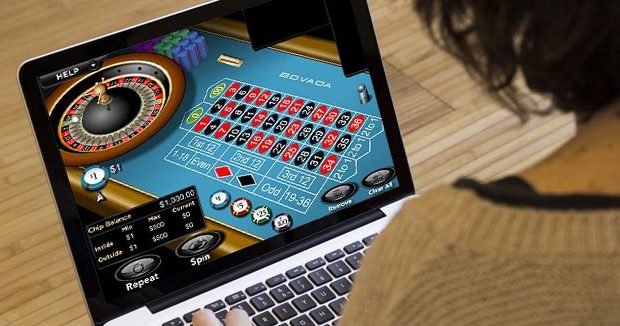
Unlike multi-street poker games where tension grows over minutes, Red Dog is characterized by its “instant resolution” nature. This term describes the lightning-fast interval between the deal and the result. There is no draw phase and no community river. The digital interface at Duel Casino employs this speed by animating the card peel and the subsequent win or loss almost simultaneously, generating a crisp loop that attracts players who consider the slower tactical drag of other table games unengaging. The “Win Pop-Up” appears on the felt without obscuring the chips, clearly indicating the spread encountered and the multiplier applied, giving us a transparent audit trail for every hand we play in rapid succession.
FAQ
What exactly does “spread” indicate in Red Dog?
The spread represents the numeric gap between the two initial face-up cards. If the dealer shows a 4 and a 9, the cards that fall precisely between them include 5, 6, 7, and 8. This creates a 4-card spread. The payout we receive if we win varies with the size of this gap, with narrow spreads offering higher multipliers because of their reduced probability and wider spreads typically paying even money.
Must I to double my bet when I spot a pair?
No, raising on a pair is totally optional. When the first two cards match in rank, we have the option to place a raise equal to the ante for a chance to win an 11-to-1 payout if the third card also matches. If we opt not to raise, the hand is declared a push and our original ante is refunded immediately without any penalty or deduction.
What is the payout for a 1-card spread function?
A 1-card spread takes place when exactly one rank sits between the two exposed cards, such as a 7 and a 9 where only an 8 can win. This constitutes the riskiest wager, and the house usually rewards success with a 5-to-1 payout on the total amount wagered, counting any raise we decided to place before the third card was drawn from the deck.
For what reason is a spread of seven cards considered the strategy threshold?
A 7-card spread is the mathematical neutral point in Red Dog. When the spread is exactly seven cards, the probability of winning combined with the even-money payout makes increasing your stake a statistically balanced or slightly favorable decision. For spreads of six or fewer, the correct mathematical play is to stand and avoid increasing the stake because the risk exceeds the potential reward.
What occurs if the third card falls outside the spread?
If the third card’s rank is not strictly between the initial two values, the hand loses. For instance, with a 5 and 10 showing, a third card of 4 or Jack results in a loss of both the ante and the raise. If the third card equals the rank of exactly one of the original cards, such as a third 5 hitting that 5 and 10 spread, the out is also a loss.
May I play Red Dog for free before wagering real money?
Yes, many online platforms, including the Duel Casino lobby, offer demo or free-play modes for table games. This permits us to explore the terminology, test the seven-card strategy, and practice the flow of raising and standing without any financial risk. It is a practical way to ensure the vocabulary and decision-making become second nature before committing any real funds.
The “Pair” Scenario and Side Wagers
How Matched Pairs Function
When the initial two cards share the same rank, the dealer does not announce a spread. Rather, a markedly different process begins. The dealer splits them automatically and we have the option to place a fresh raise that is identical to our original ante. The third card is then drawn. If that third card matches the pair’s rank, forming three of a kind, we win at a very lucrative 11-to-1 on the raise bet. If the third card does not match, the hand is a push; the ante comes back to us and no funds are exchanged. We are under no obligation to raise with a pair, but declining means we simply push the ante and pass up the chance at a massive multiplier without any extra risk of losing our initial bet.
Assessing the Risk of Pair Raises
The psychology of the pair wager often leads players astray. Seeing two Queens facing up triggers an emotional rush because the 11-to-1 payout appears extremely appealing. However, with two cards already out of a 52-card deck, only two cards are left to finish the three-of-a-kind. This gives us a two in fifty, or approximately a four percent, chance of victory. The true odds stand at 24-to-1 against us, yet the house only pays 11-to-1. From a purely mathematical perspective, this bet gives the casino a substantial advantage. We feel it is optimal to consider the pair raise as an exciting volatility spike rather than a long-term profit center, and to savor the excitement without misinterpreting it as a statistically wise bet.
Putting Your Vocabulary at the Tables
We have discussed the numerical spread, the aggressive raise, the defensive stand, and the rare thrill of the matched pair. This terminology is more than just jargon; it is a resource that unlocks the rhythm of the felt. Walking up to a table armed with the knowledge of why a 7-card spread signals action while a “rag” signals caution transforms us from passive observers into active participants. The terms discussed here operate universally across both brick-and-mortar pits and polished digital halls like those found in the Duel Casino lobby. We recommend keeping this vocabulary guide open in a separate window during your first few sessions, referencing the break-even ratios until they become muscle memory. The house will always have its slim edge, but with precise terminology and the strategy attached to it, we ensure that our decisions are sharp, intentional, and free from avoidable confusion. Let the cards fall where they may, but let your understanding of the game’s language never waver.